Books
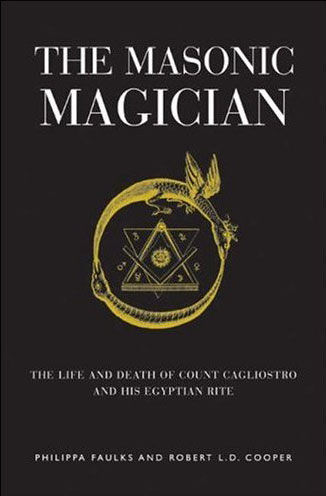
The Masonic Magician: The Life and Death of Count Cagliostro and His Egyptian Rite
“The Masonic Magician” tells Cagliostro’s extraordinary story, complete with the first English translation of his “Egyptian Rite of Freemasonry” ever published. The authors examine the case made against him, that he was an impostor as well as a heretic, and find that the Roman Church, and history itself, have done him a terrible injustice. This engaging account, drawing on remarkable new documentary evidence, shows that the man condemned was a genuine visionary and true champion of Freemasonry. His teachings have much to reveal to us today not just of the secrets of the movement, but of the mysterious hostility it continues to attract.
Cracking the Freemason’s Code: The Truth About Solomon’s Key and the Brotherhood
In “Cracking the Freemason’s Code”, Robert Cooper explains exactly who the Freemasons are and what they do. As the Curator of the Scottish Masonic Museum and Library, the author is in a unique position to reveal the secret history of this elect brotherhood. Prompted by growing public interest and provoked by the controversial stories that circulate about Freemasonry, this is the first time that he has chosen to do so. “Cracking the Freemason’s Code” is written with an insider’s knowledge and privileged access to archive material, including never-before published images. It lays bare the intriguing symbolism, beliefs and history of the Masons, and explains the structure of Freemasonry, its ethos and connections to other covert societies. It also discloses the identities of famous Masons and the locations of important Masonic sites. This is the book that answers once and for all any questions readers may have about what Freemasonry is and the role it has played in shaping our society.
The book is published in the USA by Simon and Schuster to go there click on the logo:
The Rosslyn Hoax?
Would you like to know the truth about Rosslyn Chapel? Since the publication of the novel “The Da Vinci Code” huge numbers of non-Masons have been asking questions and putting forward theories about Freemasonry, especially Freemasonry in Scotland, and its alleged connections with the Knights Templar and Rosslyn Chapel. This book is a product of the research undertaken to answer those thousands of questions. The results will surprise a lot of people. The author asks:- Have we the public been the victims of a massive hoax? Is it true that Rosslyn Chapel has been changed to make it Masonic? Are the Freemasons themselves the victims of an enormous conspiracy? Has the meaning of the Kirkwall Scroll been hijacked for a particular purpose? Who benefits from trying to cover it all up? Robert L. D. Cooper is the Curator of the Grand Lodge of Scotland Museum and Library in Edinburgh and is in a privileged position to know from the inside the truth about all the various theories regarding Rosslyn Chapel, Freemasonry, the Knights Templar and the Sinclair family. For the first time a Freemason, pre-eminent in the field, speaks out. At last Freemasons themselves are being asked about Freemasonry and this book provides the answers.
The Rosslyn Hoax?
This best selling book is now available in paperback and contains a number of corrections and improvements. The index in particular is greatly improved with much more precise detail as to where to locate particulare subjects, names and places.
For a paperback this is still a pretty heafty tomb and does not slip easily into a pocket. The author would probably argue that it is not intended to be a ‘carry - around’ guidebook of Rosslyn Chapel or any other place for that matter - it is simply a matter of packing the same amount of information into a small size package at a much reduced cost. The paperback is only £7.99 a price described as a bargin considering the sheer amount of information, detail and images that it contains. It is reported that because of the successs of the paperback edition a second (paperback) edition is being considered with considerable enhancements.
The Genealogie of the Sainteclaires of Rosslyn
Of all the books that I have written or edited this is probably the most important. Between approximately 1690 and 1719 Father Augustine Hay, a Roman Catholic priest who’s mother had married into the Rosslyn family after she was widowed undertook the enormous task of transcribing all the documents that were stored in Rosslyn Castle. He intermingled his transcriptions with the oral history and traditions of the St. Clairs of Rosslyn and fortunately indeed are we that he did so for all the documents (Charters, marriage contracts, land transactions etc.) have since disappeared. An abbreviated version of this book was published in 1835 by James Maidment but was limited to only 120 copies and so is extremely rare. Researchers wishing to obtain details about the St. Clair family since their arrival in Scotland in 1307 had no choice but to visit specialist libraries. In 2002 the Grand Lodge of Scotland took the bold decision to reprint Maidment’s book. Although I was the editor the outstanding feature of the book is that for the first time all the Latin documents were translated into modern English by Brother John Wade. At last people could judge for themselves if what numerous popular authors claimed the Latin Charters etc. said regarding the Knights Templar, Rosslyn Chapel and Freemasonry were in fact correct.
This is not a ‘bedtime reading book’ but is essential for those interested in Rosslyn Chapel, the St. Clair family, Freemasonry, the Knights Templar and a host of other subjects that have become inter-connected due to the efforts of popular authors. The hardback edition of the book sold out very quickly and there are a limited number of paperback editions in Freemasons’ Hall.
The Complete Manual of Freemasonry
The title is somewhat misleading as it suggests that this book in some way ‘tells all’. Actually nothing could be further from the truth. This is in fact a ritual, to be more precise a Scottish Ritual. It was first published in 1917 and William Harvey, a committed Freemason, who went on to become Provincial Grand Master of Forfarshire, said in his introduction that he had decided to produce this ritual in order to correct the numerous English innovations he had noted creeping into Scottish Masonic practice. Of course he was commenting on what he saw in his lifetime as a Freemason and so this ritual provides one point in time when a prominent Scottish Freemason became concerned enough to published a ‘corrected’ Scottish ritual. Whether or not he got it right is not (yet) for debate here but it is significant to note that it has remained in print ever since and this is now the 21st edition!
Marking Well
No, I did not write this book! I was asked to contribute a chapter. The book is esentially a collection of essays which are in some way connected with the Mark ceremony - a part of Freemasonry added to the Masonic ‘family’ in the UK during the 18th century. Fot that reason it is a great book to ‘dip into’ and chose from one of the fourteen essays which range from a most interesting piece by Jennifer S. Alexander on actual stonemasons’ marks in medieval buildings, especially churches, and their importance as records from that period of church building, to how the Masoninc Mark ceremonry operates overseas today. A wide range of commentary indeed.
This is not a book which generally applies to Scotland there being only one chapter that relates to that country (guess who contributed that?) because the history of the introduction and development of the Mark ceremony is quite different from the English experience. Indeed, most Freemasons will be surprised where their Grand Lodge of Mark Master Masons originated… A Recommended read. I suspect that this book will be one of those that you know you should have bought at the time but by the time you get round to it they have sold out. I know that the publisher, Lewis Masonic has a relatively small stock left so if you are interested click here or on the previous link.
The Illustrated Guide to Rosslyn Chapel and Castle, Hawthornden, &C
Following the phenomenal success of the novel - The Da Vinci Code by Dan Brown the Grand Lodge of Scotland Has been innundated with enquiries about Scotttish Freemasonry and alleged connections with the medieval Order of the Knights Templar, modern Freemasonry and numerous subjects which have rightly or wrongly come to be associated with the chapel and Freemasonry such as the Priory de Sion etc.
The Guide Book sold at Rosslyn Chapel today is modern, attractive and well illustrated publication. Unfortunately, the book contains wildly inaccurate information about Freemasonry, and more especially Scottish Freemasonry. The Illustrated Guide to Rosslyn Chapel was first published in 1892 and whilst it makes some references to Sottish Freemasonry it does so in an accurate, unspectacture, way. This Guide Book was written by the Chaplain to Francis Robert, 4th Earl of Rosslyn, who was the Episopalian Priest to the St. Clairs of Rosslyn for several decades, and also acted as the official guide to people visiting the chapel in the late 19th and early 20th centuries. This book is authorative and crammed for of information that more recent, popular, writers have chosen to ignore.
I edited this book, and added an new introduction, in the hope that it would balance the more ridiculous claims being made about Scottish Freemasonry, Rosslyn Chapel, the Knights Templar and assorted assertions that the chapel houses, for example; the Holy Grail, the embalmed head of Jesus Christ, the ‘actual’ treasure of the Knights Templar (gold, precious jewels, silver etc.) or even the lost diaries of Jesus Christ or perhaps even the ’secret’ that Christ had children by Mary Magdlene and that their decendants of the Son of God still walk among us.
This reprint, edited by me, of what the St. Clair family believed their origins to be 100 years before the publication of very speculative and often unsubstantiated claims of connections with King Solomon’s Temple, Freemasonry, and the medieval Order of the Knights Templar is an superb corrective to that recent ‘pop’ history. I am amazed, but delighted, that this accurate description of Rosslyn Chapel is again available and what is more as a Hard Back book is priced at only £12.50!
The Templar Church of London
Since the novel, The Da Vinci Code, was published the Templar church just off London’s Fleet Street had experienced a huge increase in visitor numbers. There are tour companies which now offer ‘Da Vinci’ tours which take in the main sites of the novel - Rosslyn Chapel, the Templar church in London and the Louvre Museum in Paris.
This guidebook was first published in 1907 and is similar to that of Rosslyn Chapel small but packed with information about the church which tells its story from the time that it was begun to the the 1950’s restoration after being damaged during the Blitz. Unusually for a guidebook it includes a pretty comprehensive history of the medieval Order of Knight Templar for whom the church was built.
This book (abailable in both hard back and paperback from the Grand Lodge of Scotland) has recently be replaced by a Pitkin Guide which although well illustrated with quality photographs tells the minumum necesssary to qualify as a guidebook. In editing the book I have corrected several errors and the printer has been faithful to the original in terms of size and quality. The original black and white images have been used throughout.
An Account of the Chapel of Roslin 1778
The first known public description of Rosslyn Chpael was by Sleazer in 1696 but this was a single page in a compendium of Scottish buildings. The first known guidebook was published in 1774 in Edinburgh. The edition was a pirated copy of the 1774 version and there is no doubt that it was printed to the take advantage of the the death in that year of William St. Clair of Rosslyn (1700 - 1778) who had been the first Grand Master Mason of the Grand Lodge of Scotland, founded in 1736.
It is therefore the ’starting point’ for all serious studies of Rosslyn Chapel as it is the earlierst known, comprehensive, guidebook to the chapel and provides an insight as to how the chapel was perceived more than 250 years ago. Written by the Bishop of Caithness, Robert Forbes, he provides details of both the interior but primarily of the interior and the carvings and their meaning. More revealing is what he doe not say about the chapel with which he is clearly intimately acquainted. For any serious student of the St. Clair family and Rosslyn Chapel and subjects which have subsequently come to be associate with them such as Scottish Freemasonry, the Knights Templar and other subjects this is an essential starting point. Published by the Grand Lodge of Scotland - the home of Scottish Freemasonry.
Freemasons, Templars and Gardeners
This book was produced to accompany my world tour sponsored by the Australian & New Zealand Masonic Research Council (ANZMRC) in 2005. The concept is simple Research Lodges, and any other Masonic body for that matter, would like to hear a guest speaker they contribute part of the total cost of the entire trip. The Lodge etc. then can often recoup the money by selling tickets for the event.
Prior to enbarking on the tour the lecturer submits approximately 12 lectures from which the Lodges can choose. This book comprises those 12 lectures. Some are in an abreviated form other are full versions. Published in Melbourne, Victoria, 2005 it is now out of print.
The tour was an unforgetable experience and took me to South Africa, India, Hong Kong, all over Australia and New Zealand (North and South Islands), California and finally Washington State. Throughout I was treated with kindness and respect and made many, many friends. I would take the opportunity of thanking in particular Tony Pope who editied the book superbly and Kent Henderson who was the main organiser. Thank you all. The book’s title gives some idea of the subjects covered in the book.
An Introduction to the Origins and History of the Order of Free Gardeners
At one time it was not at all unusual for a man to belong to an organisation such as the Free Gardeners. There was no state protection against unemployment, sickness or the expense of a funeral. Organisations such as the Free Gardeners were initially ‘Initiationary’ organisations with a series of dramas in which the new member participated during which certain moral and social values were taught. The organisation often had a benevolent aspect were, in cases or emergency, small sums of money would be provided to a member to ‘tide him over’. Eventually this aspect of the organisation came to be the dominant aspect and the esoteric or degree ceremonies became much reduced of ceased altogether. The Free Gardeners had sprung directly from those involved in the occupation of gardening, especially those engaged in the designing, planting and maintenance of the landscaped areas which surrounded the country homes of the aristoctracy. It is a uniquely Scottish phenomenon that organisations such as the Free Gardeners were deveoped by working men using their occupational knowledge to create an exclusive society designed for them alone. It is for that reason, in Scotland, that we find the creation of, for example, the Free Colliers, the Free Carters, the Free Potters, the Free Carpenters, the Free Fishermen and of course the Free Masons. Other oganisations which tend to be included in this type of group are the Oddfellows, the Foresters and the Shepherds. However, these were ‘invented’ oranisations and not based on the practical working lives of the members.
The curious situtaion now exists where when once it was quite normal to belong to such an organisation they have all but disappeared leaving Free Masons (now usually referred to as Freemasons and Freemasonry) sticking out like a ’sore thumb’ - perhaps that is why, today, they attract so much attention?
A Winter with Robert Burns
When W. Stewart Watson painted the picture allagedly showing Robert Burns being made Poet Laureate of Lodge Canongate Kilwining, No.2 on 1st March 1787 he took careful note of everyone who was included. This book was published to accompany engravings of the painting. Profits from the sale of the book and engravings went to the artist.
The painting, executed during late 1845 and early 1846, is controversial as by that time Burns has been dead for 50 years and very few, if any, of those shown in the painting were alive by the time Watson started work. This is further compounded by the fact that the Minute Books of the Lodge show that on 1st Februrary 1787 Burns was in the Lodge and is so mentioned by the Secretary. The Minutes of 1st March when the event in the painting allegedly took place make no mention of Burns nor is there any reference to ceremony which is the subject of the painting. Today it is thought that the Lodge was either retrospectively honouring Scotland’s National Bard whether out of embarrassment that they had not done more during his life time or merely to bask in the reflected glory that Caledonia’s Bard had visited their Lodge. In any event the picture is a fair representation of a late 18th early 19th century Masonic Lodge.
Editing this book was great fun as the author John Marshall (? - 1870) provides interesting, often humorous biographies of each individual including in the picture. The contains a fold out version of the painting together with a fold out ‘key’ naming each individual. The Grand Lodge of Scotland (the home of Scottish Freemasonry) have a few copies remaining.
The Inauguration of Brother Robert Burns in Lodge Canongate Kilwinning, No.2, (Edinburgh) on 1st March 1787. In 1996 the Grand Lodge of Scotland produced a limited edition poster size print, in full colour, in celebration of the life of one of Scotland’s most famous sons and one who happened also to be an ardent Freemason. There are a few small number of this high quality poster size prints still available. Please contact the Grand Lodge of Scotland (not me) for more information.